Master Your Fitness Budget with a Calorie Amortization Schedule
Think about your personal finances for a moment. You wouldn't just guess your monthly spending without a ledger or a budgeting app, right? You track what comes in, what goes out, and what remains. Yet, when it comes to our physical health—arguably our most valuable asset—many of us operate on vague feelings and hopeful guesses. We "try to eat better" or "aim to work out more," but lack the clear, structured data to see the real picture. This is where the concept of a Calorie Amortization Schedule Template transforms abstract goals into a tangible, manageable plan. It applies the proven logic of financial planning directly to your nutrition and activity, creating a powerful visual tool for accountability and success.
More Than a Spreadsheet: A Visual Framework for Clarity
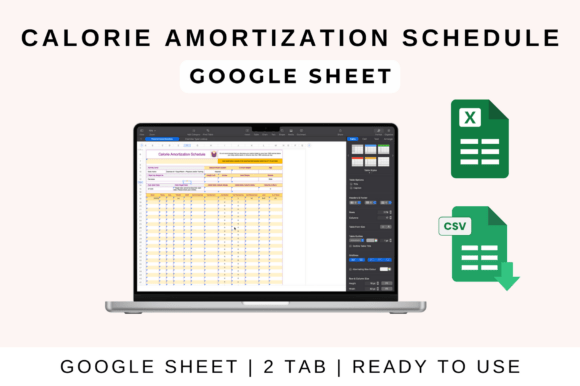
At its core, a Calorie Amortization Schedule Template is a structured digital sheet designed to map out your calorie "budget" over time. Just as a loan amortization schedule breaks down principal and interest, this template breaks down your daily calorie allowance (your "income"), your calories consumed (your "expenses"), and calories burned through activity (your "investments"). The result is a clear "remaining balance" that tells you exactly where you stand each day and cumulatively over the week. Visually, it should feel clean, organized, and intuitive. A well-designed template uses a clear hierarchy—perhaps with bold headers for key dates and totals, and subtle color coding to differentiate between intake and expenditure. The appeal isn't in flashy graphics, but in its functional elegance. It’s a modern typography approach applied to data: using space, alignment, and subtle styling to make complex information digestible at a glance. This isn't just a tracking sheet; it's a dashboard for your health.
Practical Applications: From Personal Goals to Professional Projects
The true power of this template lies in its versatility. For the individual, it’s a daily accountability partner. It makes the abstract concept of a "calorie deficit" or "surplus" concrete. You can see exactly how a big lunch affects your week's balance, or how a long hike "earns" you more flexibility. But its applications extend far beyond personal use, making it a valuable design asset for various professionals.
For fitness coaches and nutritionists, providing clients with a customized Calorie Amortization Schedule Template is a premium service. It adds a layer of professionalism and structure to their coaching, acting as a tangible deliverable that clients can interact with. For content creators and bloggers in the health and wellness space, offering a free or premium version of this template can be a powerful lead magnet or a valuable resource for their community, enhancing their brand identity as a helpful authority. Even small business owners in the wellness industry—like gym owners or healthy meal prep services—can use branded versions of this template as a value-add for their customers, reinforcing their commitment to their clients' holistic success.
Integrating the Template into Your Workflow
Getting started is straightforward. The template is designed for full compatibility with the tools you already use: Google Sheets, Microsoft Excel, and Apple Numbers. The process is about consistency, not complexity.
- Set Your Baseline: Begin by entering your daily calorie allowance. This is your financial "income" for the day, based on your goals (maintenance, loss, or gain).
- Log with Precision: Throughout the day, record your food intake under "Calories Consumed." For the most accurate tracking, use a food scale and a nutritional database. Think of this as meticulously logging your expenses.
- Account for Activity: Log your exercise under "Calories Burned." This is your earned income, increasing your daily budget. Be honest with estimates—most people overestimate this.
- Review the Balance: The sheet automatically calculates your net intake and remaining balance. This is the moment of truth. A positive remaining balance indicates a surplus, a negative one a deficit. Review this daily to understand your patterns.
- Analyze the Amortization: Look at the weekly or monthly cumulative totals. This long-term view is crucial. It shows you the amortization of your efforts—how daily choices compound over time, just like interest. This is where you see real progress or identify systemic issues.
The key is to treat this not as a punitive chore, but as a neutral data-gathering exercise. The numbers don't judge; they inform. They allow you to make small, intelligent adjustments—swapping a snack, adding a walk—based on clear evidence rather than guesswork.
Choosing and Customizing Your Tool
While the core function is standard, the presentation matters. When selecting or creating your Calorie Amortization Schedule Template, consider its readability and ease of use. A cluttered sheet will discourage daily use. Look for a design that uses a clean, sans-serif font for the data cells to ensure numbers are easy to read at a glance. The overall visual hierarchy should guide your eye naturally from your daily log to your weekly summary.
Don't be afraid to customize. Adjust the categories to fit your life. Add a column for notes to log how you felt (energetic, sluggish, satisfied). Change the color scheme to one that you find motivating or calming. If you're distributing it as part of a brand, ensure the styling aligns with your overall brand identity—using your brand colors and fonts consistently. This transforms a generic tool into a cohesive part of your personal or professional ecosystem.
Ultimately, the Calorie Amortization Schedule Template is about empowerment through clarity. It replaces the anxiety of the unknown with the confidence of a plan. By adopting this structured, amortized view of your energy balance, you move from hoping for results to strategically engineering them, one day at a time. It’s a practical application of modern typography